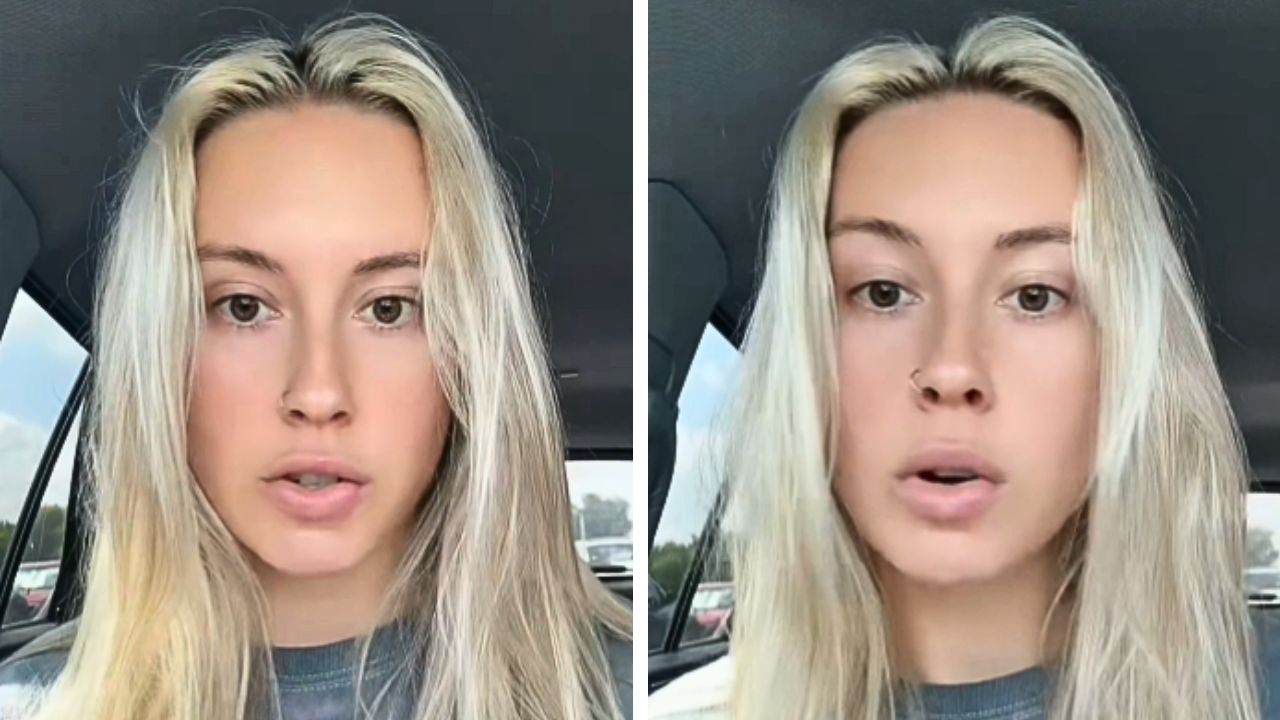
Conservative commentator and digital creator Kaylee Campbell discussed H-1B visas, Indian homebuyers, and 30-year mortgages in a video that has made its way to X thanks to @WallStreetApes.
With over 232,000 views as of publication, the video also has commenters asking how temporary U.S. work visas can lead to longer-term lives in the U.S.
In the video, Campbell pointed to National Association of Realtors data showing that Indian nationals purchased $2.2 billion worth of existing homes in the U.S. between April 2024 and March 2025. She also cited data showing that 97% of Asian Indian buyers already lived in the U.S., while 66% purchased a home as their primary residence.
Campbell said that people on a temporary work visa would purchase homes as primary residences when H-1B status is limited to six years. She argued that the ability of some H-1B workers to stay in the U.S. beyond that period means the program is no longer functioning as a temporary arrangement.
She questioned how H-1B workers could qualify for 30-year mortgages given their temporary status, arguing that lenders must expect these borrowers to remain in the country long-term.
Foreigners are only supposed to stay in the United States for about to 6 years total on a on H-1B visa
— Wall Street Apes (@WallStreetApes) July 26, 2026
? New banking data shows our banks are approving 30 years mortgages for Indians on H-1B visa to buy homes in America. Aiding them in abusing our Visa system
“The H-1B housing… pic.twitter.com/ucY8G8xvtM
On X, some users supported Campbell's argument while others added their own claims about the H-1B program. “It's not just Indians,” one wrote, and said that H-1B workers can have children who become U.S. citizens and potentially sponsor their parents. The commenter also questioned how non-U.S. citizens could qualify for 30-year mortgages.
Another user called the situation a “MAJOR problem.”
Another commenter argued that banks knowingly extend long-term credit to H-1B holders, suggesting financial institutions anticipate these workers will remain in the country. Other users focused on the length of H-1B stays. One commenter noted that there is “no automatic or guaranteed full 6-year stay,” as an initial H-1B admission can be granted for up to three years.
Representative Eli Crane introduced the End H-1B Visa Abuse Act of 2026, which proposes a 3yr pause on H-1B issuances and reforms such as reducing the annual cap, eliminating exemptions, and replacing the lottery system with a wage-based selection process.
— Free Dom (@gradtofreedom) July 26, 2026
It sounds like… pic.twitter.com/QNCLCXON7g
Some commenters also spoke against the characterization of extensions as a “loophole.” One user brought up Form I-140, which is an employment-based immigrant petition, and can allow certain H-1B workers to extend their status beyond the normal six-year limit. That is only permitted if the person applying is pursuing permanent residency, though.
As of publication, lawmakers were debating the future of the H-1B program. Rep. Eli Crane, R-Ariz., introduced the End H-1B Visa Abuse Act of 2026, legislation that would pause new H-1B visa issuances for three years and propose changes including a lower annual cap and a wage-based selection system.