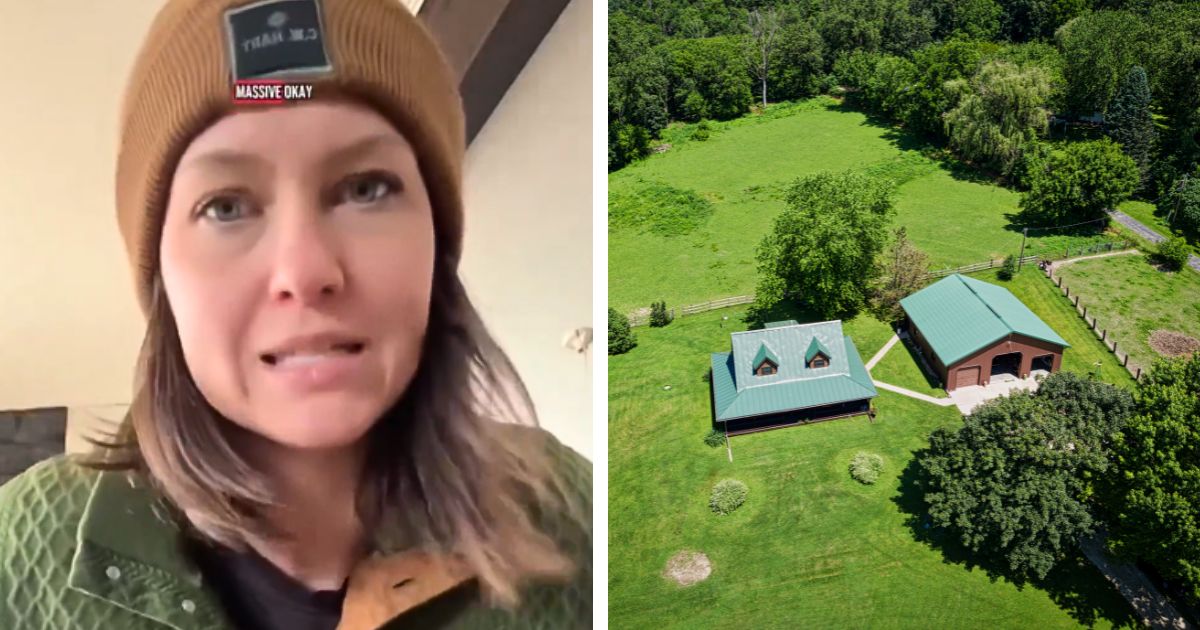
A TikTok video of a Wisconsin woman describing how local zoning laws prevent her from building tiny homes for her children on her 37-acre property has gone viral after being reshared on X.
In the video, Miller talks about going to a local office to get details about building tiny houses on her land or for her kids. However, an official told her that the number of houses that could be constructed on the property had to be limited by local zoning rules.
"I have 37 acres," Miller said. "There's plenty of room to put a tiny home."
The official repeatedly told her the property was not zoned for more than one home. Miller said she planned to build three small homes on a portion of the land so her kids could grow up close by. There was also concern about floodplain regulations.
According to Miller, the official showed a "100-year floodplain" that affects a section of the land. She questioned how the rank applied to property that, in her opinion, no longer floods because of drainage repairs.
This woman OWNS 37 acres of land.
— MatrixMysteries (@MatrixMysteries) June 1, 2026
Not leased. Not borrowed. OWNED.
And the government still told her she can’t put a tiny home on it.
“I said, I OWN the land. It's massive. What's the problem?”
Ownership means NOTHING when permission is required for everything. pic.twitter.com/PD1g4V5jVl
By the end, Miller was given information on a rezoning request, which could allow an extra home on the property.
Many viewers related to the video. "Well, in all fairness, they may want to build a data center on it or a massive highway through it," one X user snided. "Kinda selfish of her to think she actually owns it, honestly." Another argued that governments have too much power over the lives of their citizens. Meanwhile, another suggested setting up a recreational vehicle pad rather than constructing an actual residence.
Another common misconception about property ownership came up, thanks to this video.
Floodplain designations, as seen above, also have an impact on construction decisions. Federal, state, and local authorities regularly refer to flood maps and assessments of risk when deciding where they can build homes and other structures. These restrictions typically try to protect public safety and prevent flood damage.
A professional survey helps verify whether a property is in line with local zoning laws, setbacks, height restrictions, floodplain designations, and environmental overlays.#BradenLandSurveying #LandSurveyor #LandSurveyinghttps://t.co/krlKR6Gh6S pic.twitter.com/9TocMv73QG
— Braden Land Surveying (@BradenSurveying) July 21, 2025
Miller said she remained committed to building a family complex for her children and was exploring rezoning options — "The hill I die on is when I'm [sic] building three tiny homes," she said.
The details above reflect Ashley Johnson Miller's account as shared on TikTok. The specific local regulations cited have not been independently confirmed.