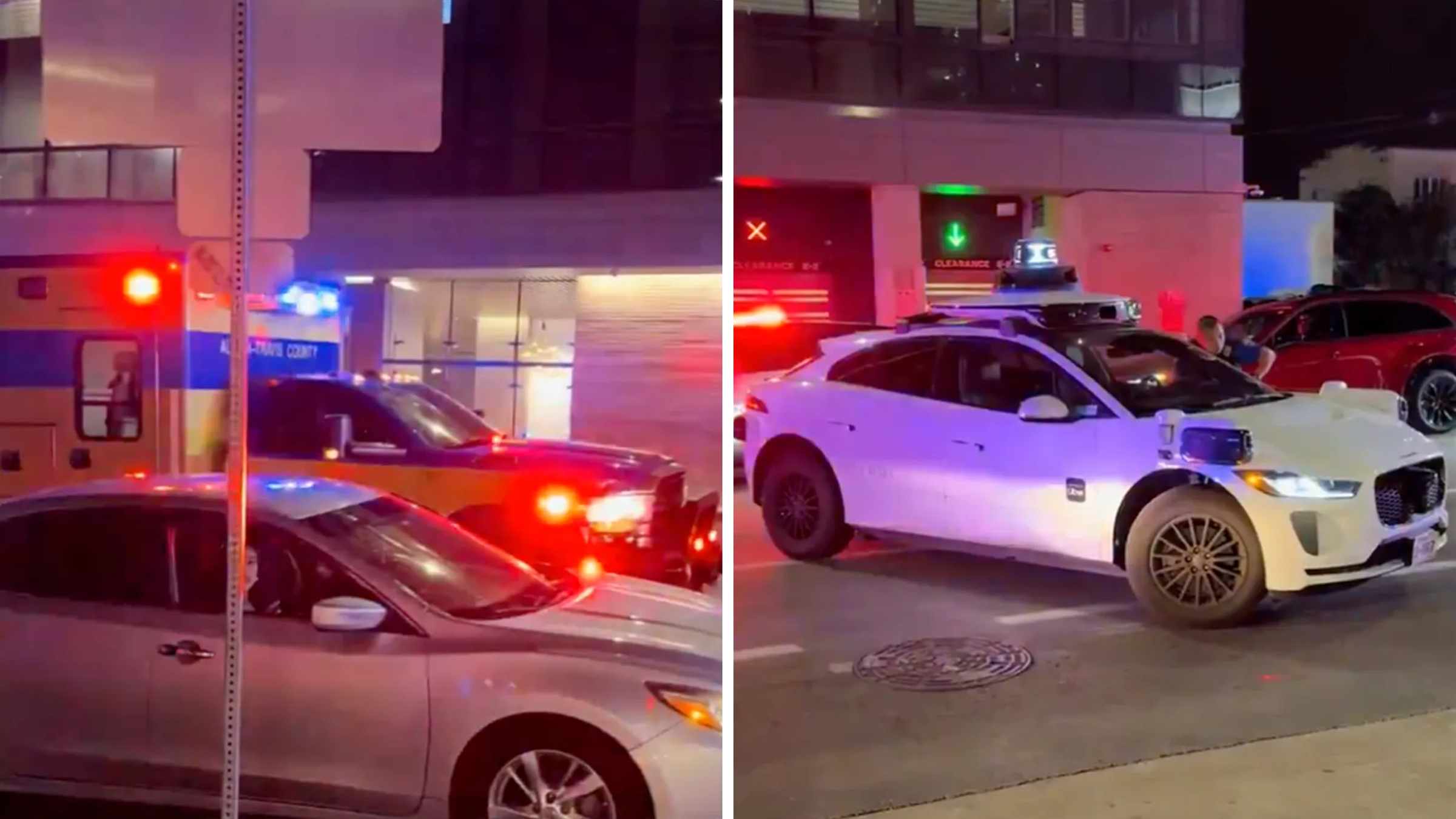
A driverless Waymo robotaxi briefly blocked an ambulance responding to a Sunday morning mass shooting in downtown Austin, Texas, according to officials and witness video that quickly spread online.
Although first responders were able to resolve the issue within minutes, the incident renewed concerns about autonomous vehicles in unpredictable emergencies, especially in cities like Austin, where Waymo rides are now widely available through the Uber app.
How the Waymo vehicle ended up in the middle of the response
A Waymo official confirmed the robotaxi was traveling to pick up a passenger near the shooting scene on West Sixth Street. Meanwhile, a bystander recorded video around 2 a.m. at West Sixth and Nueces streets.
The footage showed the robotaxi stopped across the street as an ambulance attempted to get through.
Matthew Turnage, seemingly the passenger who ordered the robotaxi, told KXAN he noticed the issue after leaving a club and ordering a ride home. "We left a club at 2 a.m. and were walking to get a ride home," Turnage said.
"We just so happened to get a Waymo car from Uber and when we found the car, it was trying to pick us up but got stuck in the middle of the street and blocked emergency vehicles for a couple of minutes."
WATCH: A Waymo vehicle blocked traffic as first responders raced to the Austin bar mass shooting, where three were killed and 14 injured.
— Breaking911 (@Breaking911) March 1, 2026
pic.twitter.com/Wsz0CvO6OM
In the video, the autonomous car slowly rolled forward as a police cruiser arrived behind it.
A police officer was able to speak to the company through the car's speakers and get them to move it to a nearby parking garage. Waymo later confirmed to Axios that the clip was legitimate.
EMS officials and online critics reacted differently
Austin-Travis County EMS spokesperson Capt. Christa Stedman confirmed the interference and stressed that first responders handled the situation quickly.
"The officer in the video followed established protocol to address the situation and was able to quickly move the vehicle so ATCEMS units could proceed," she told Axios. She also explained that crews are trained for situations involving stopped or unresponsive driverless vehicles.
Online reactions proved far less measured. Some people accused autonomous vehicle companies of prioritizing expansion over safety.
Others questioned who should face the consequences when a robot blocks emergency care. Several people argued that a human driver would face criminal charges under similar circumstances.
@ConroyJohn36064 tweeted, "It is not funny. Any victims who were delayed treatment should sue the h out of them."
Critics also pointed to Waymo’s recent history in Austin and other cities. In recent months, residents complained about Waymo cars failing to yield to emergency vehicles. Additionally, some commenters blamed nearby human drivers, saying they failed to clear space or stop rolling forward.
Waymo did not respond immediately to the Daily Dot’s request for comment via email.
The internet is chaotic—but we’ll break it down for you in one daily email. Sign up for the Daily Dot’s newsletter here.