Polymarket found itself under fire once again after users noticed it was taking bets on a nuclear catastrophe.
The crypto-based prediction platform recently let traders wager on when the U.S. would strike Iran. When real-world violence erupted and hundreds of people died in the conflict, critics questioned why anyone could profit from war.
Soon after, attention turned to a separate event that asked whether a nuclear weapon would detonate this year. The market drew heavy trading and attention, and shortly afterwards, the company pulled it down.
Polymarket's nuclear detonation market
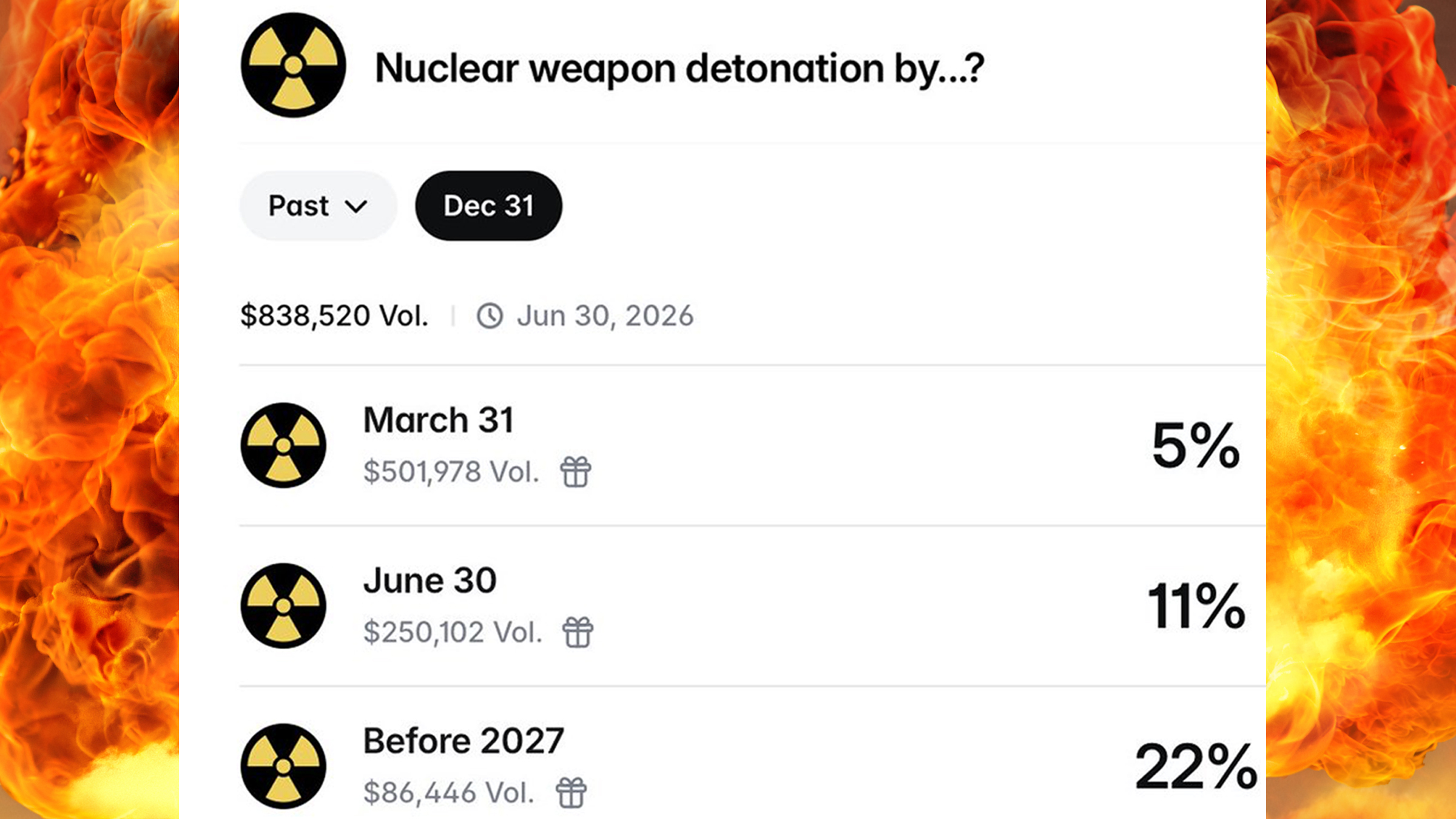
The event, titled "Nuclear weapon detonation by…?" attracted more than $847K in trading volume before being shut down.
Contracts covered three potential timelines, including March 31, June 30, and before 2027.
Before the company archived the page, it tweeted a 22% probability of a nuclear weapon being detonated by the end of 2026 on X, though the post has since been deleted.
People online were quick to criticize the website for the insensitivity of the event.
Journalist @davidsirota wrote, "Polymarket has created a market that would monetize a nuclear attack amid increasing concerns that bets are happening among government insiders who can make military decisions." His post racked up over 4.6 million views and 5.5K retweets and quote-retweets.
Others reacted with disbelief. @hasanthehun wrote, "this is worse than any dystopia we couldve imagined."
Another person, @longjohnshirley, criticized the premise itself. "That is the really evil thing about Prediction markets. They don't RESPOND to reality. They CREATE reality. Loading up financial incentives for something to happen makes that thing more likely to happen!"
Polymarket defended the platform before pulling the event
In a statement posted to the website, Polymarket defended its Middle East-related markets. It described prediction markets as an “invaluable” source of information during crises.
"The promise of prediction markets is to harness the wisdom of the crowd to create accurate, unbiased forecasts for the most important events to society," the statement read.
"That ability is particularly invaluable in gut-wrenching times like today. After discussing with those directly affected by the attacks, who had dozens of questions, we realized that prediction markets could give them the answers they needed in ways TV news and X could not."
Polymarket had previously weathered controversy, including suspicions of insider trading tied to the Super Bowl halftime show and the U.S.'s capture of Venezuelan President Nicolás Maduro.
Prediction market analyst Dustin Gouker questioned the nuclear contract’s existence.
"I think it's pretty clear we shouldn't have betting on nuclear weapons being used in a conflict," he told Decrypt.
"Whatever small amount of utility we might get from learning the probability of that happening is offset by how terrible it is to let people speculate on that outcome," he explained. "You can also send false signals on this if the market is thinly traded. And obviously, people profiting from inside information is grotesque."
Polymarket's event titled "US next strikes Iran on…?" is still up and running, with $56.4 million in betting volume already having been traded.
The internet is chaotic—but we’ll break it down for you in one daily email. Sign up for the Daily Dot’s newsletter here.