Writers are sounding the alarm on a troubling new development in media illiteracy after Gen Z started posting about the first-person perspective. Apparently, some younger readers are taking stories told with "I" instead of "he/she/they" to mean that everything that the main character does is something they would do.
Why some Gen Z readers think "I" means them
In fiction, the first-person perspective is the closest and most intimate, told as though the main character is relaying the tale directly to the reader. These are the books that use the "I" pronoun. Third person perspective uses pronouns like he, she, and they.
The topic arose on X over the weekend after author Amy DeBellis posted a joke about the third person.
"Addicted to the worst writing style of all: third person present tense," she wrote.
People inevitably make the mistake of taking her seriously.
"Why do so many people HATE third person POV???" asked @bogwitchbooks.
On Monday, @omarsbigsister suggested that this is "because people would rather self-insert than ever think about what another person would think or do."
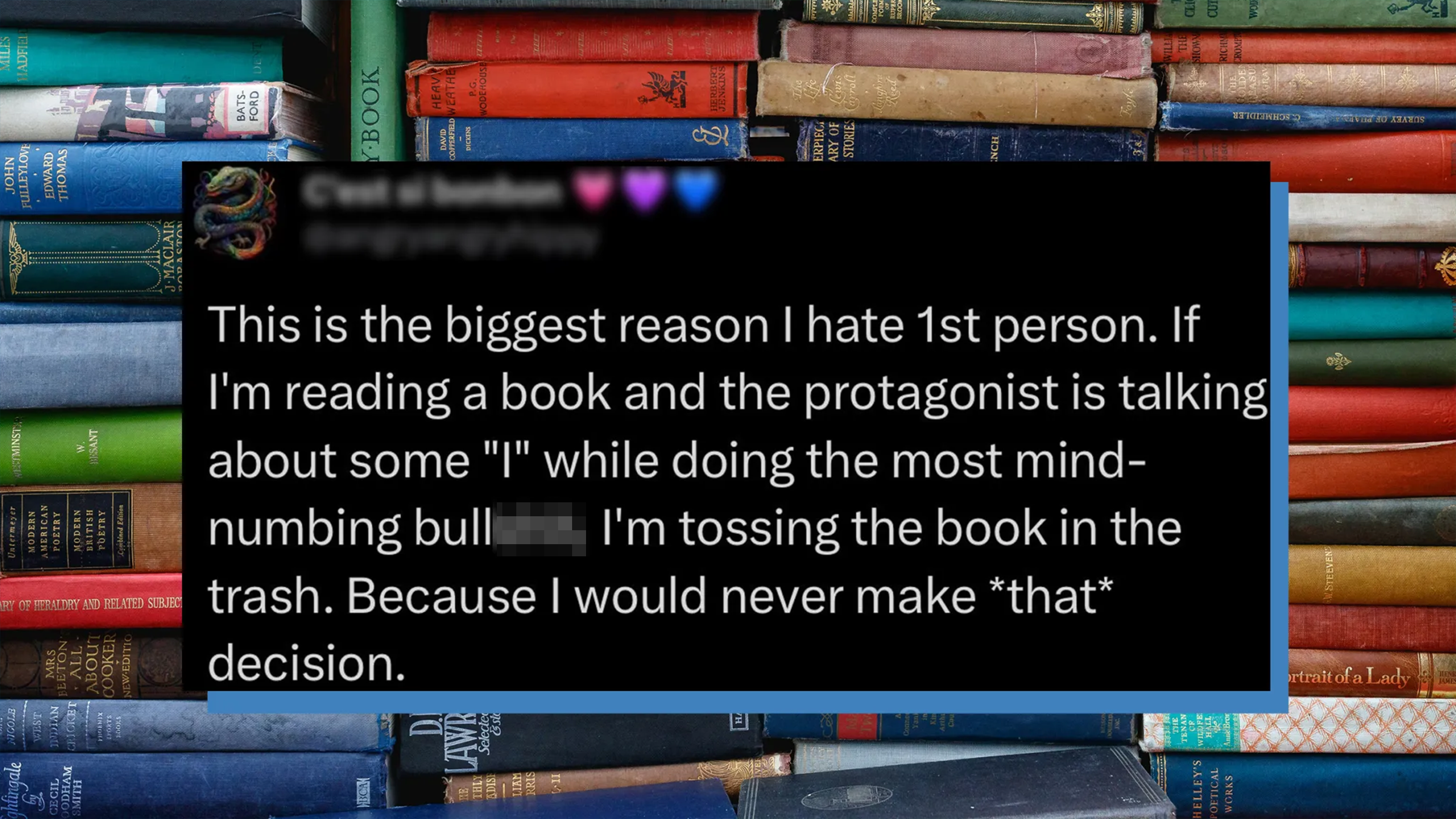
This is the quote tweet that revealed a serious knowledge gap when it comes to the function of first person perspective. Avid reader @illjoy_ did numbers with a screenshot of tweets that show a stunning misunderstanding of the subject.
I’m honestly kind of speechless at how stupid this is https://t.co/MYRYyiNmjY pic.twitter.com/WWFifmrkCK
— Joyce ★ (@illjoy_) March 31, 2026
"This is the biggest reason I hate 1st person," said @angryangryhippy. "If I'm reading a book and the protagonist is talking about some 'I' while doing the most mind-numbing bullshit, I'm tossing the book in the trash. Because I would never make that decision."
"Omg thank you, there’s nothing more annoying than first person and it’s a terrible character," @Bassanimation agreed. "'I' did not arrive at the frat party wearing no panties, THAT barnyard animal did and she’s making a mess on all the furniture."
It wouldn't be X without some misogyny tossed in.
"This is the real media illiteracy"
Readers and writers alike were baffled by this interpretation of a pronoun. First-person perspective is meant to deepen the reader's intimacy with the main character, not replace them with the reader. They're thinking of second person perspective, which is used much more rarely than its counterparts.
Some feel that this is a sign that younger generations lack a sense of media literacy. It's so bad that a few are wishing people would read less.
"This is the real media illiteracy because wym people process first person narration as them doing things and not, you know, a story being told to them by someone else," said @corporatecake.
"Never thought I’d say this, but I think fewer people should read books," @jroberts332 (hopefully) joked.
"I know it's good for many reasons that literacy is so widespread these days but also doesn't it feel cruel that people like this have been forced to learn to read?" asked @kennixonette.
"I bet you can guess which generation these people belong to," wrote @neontaster.
The internet is chaotic—but we’ll break it down for you in one daily email. Sign up for the Daily Dot’s newsletter here.