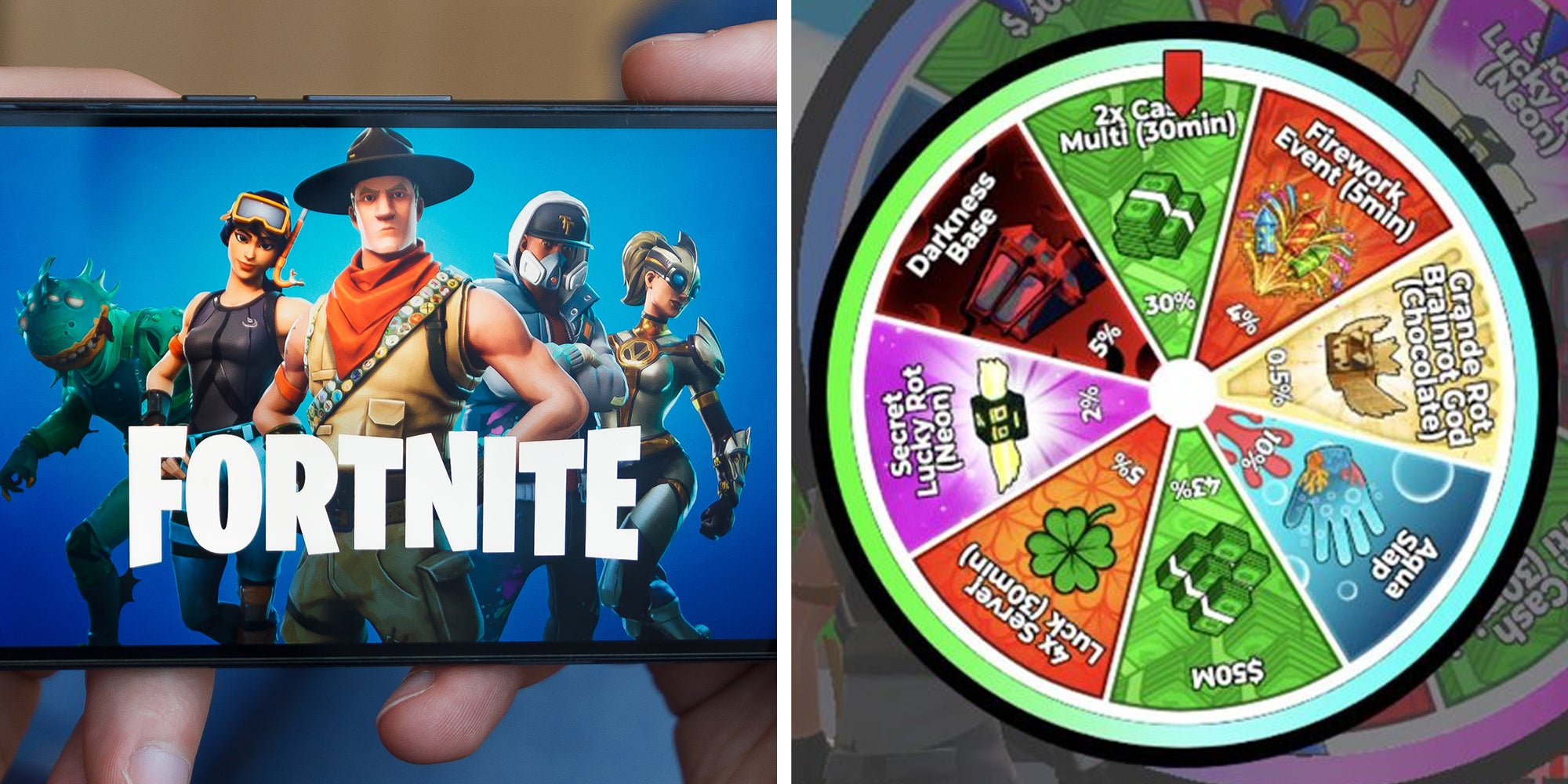
A new monetization feature in Fortnite led some gamers to accuse Epic Games of allowing a “slot machine” in a game for children. One of the community-made maps now includes a kind of roulette wheel that awards in-game items or cash—after paying a certain amount of V-Bucks for a spin.
This new development amplified concerns around the increase in gambling-like features targeting young and otherwise vulnerable gamers.
A dollar for a spin of the Fortnite wheel
Last Friday, Fortnite publisher Epic Games updated its policies to allow certain third-party titles to include in-game monetization options. These often include microtransactions—small purchases gamers can make for items or bonuses within the game.
A spokesperson for Epic Games told the Daily Dot in an email: "Developers will earn 100% of V-Bucks value from in-island transactions through January 31, 2027. Beginning Feb 1, 2027, developers will earn 50% of the V-Bucks value from transactions in their islands."
This proved a huge opportunity for developers of massively popular fan games like Steal the Brainrot. Modeled after a Roblox game, Fortnite fans made a similar map that once attracted a record 1.09 million concurrent players.
A considerable chunk of Fortnite fans are under the age of 18, as anyone who's played it will tell you. While some critics have already compared certain microtransactions to gambling, Epic's monetization changes have them accusing the publisher of allowing fan devs to create slot machines for kids.
I was optimistic about In-Island Translations, but after seeing this gambling style wheel In Steal The Brainrot I think I'm all set... pic.twitter.com/gMXjIOg1g4
— TheCoolDoggo (@thecooldoggo) January 11, 2026
Within hours of the publishing lift for developers, a "wheel spin" option for 100 V-Bucks appeared in Fortnite's Steal the Brainrot. Players can purchase that much in-game currency for about one U.S. dollar.
It might not sound like much, but in a game that targets children with bright colors and SpongeBob crossovers, it's a recipe for disaster. Neurodivergent gamers have widely criticized AAA companies for cramming microtransactions into every game possible because their impulse control issues make those titles inaccessible to them.
If there's another population that has trouble with impulse control, it's kids.
"Timmy addicted to gambling on Fortnite"
Many gamers and anyone concerned about the increase in gambling behavior in the U.S. overall came down hard on Epic Games over this development. They're calling the wheel a "slot machine" and accusing the publisher of teaching the babies to gamble for profit.
"100% working as intended, on Epic Games' part," wrote @thomasthewest. "How could you look at Fortnite's existing community games/monetisation models and not immediately see how this was innately predatory."
"14yr old Timmy addicted to gambling on Fortnite," @lunarweb333 predicted. "It’s not looking good brev."
"Disgraceful," said @shzhv13. "Gambling mechanics in a kids' game crosses every line."
"It really does seem as if all media is trying to plant gambler genes in these little kids," wrote @mrKonsole. "Sad."
This is an especially bad look alongside recent comments by Epic Games CEO Tim Sweeney about Grok's new CSAM generating feature calling those who want it stopped "gatekeepers."
Hello @Fortnite, seeing your CEO defend pornographic images of minors makes me feel incredibly unsafe to have my 4 children playing your game. I will not be buying any more Battle Passes or V-Bucks and I will encourage other parents to keep their children away from your products. https://t.co/2ifPafbLIa
— Con Ray (@ConRayArt) January 12, 2026
"All major AIs have documented instances of going off the rails," he wrote. "All major AI companies make their best efforts to combat this; none are perfect."
The internet is chaotic—but we’ll break it down for you in one daily email. Sign up for the Daily Dot’s newsletter here.